

EV charger rebates in Ontario
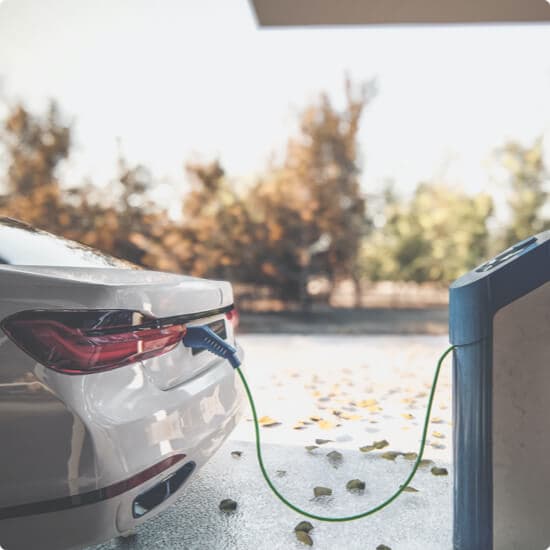
Ottawa owners can cut what a home EV charger costs to buy and run in 2026, though Ontario has no charger rebate of its own: the City's Better Homes Ottawa Loan covers a Level 2 charger and its panel work, federal Clean Fuel Regulations credits pay for home charging, and overnight power costs 3.7¢ per kWh.
We go through each program with you at the free assessment for an EV charger installation in Ottawa, in the order its approvals have to come.
On this page
- What EV charger incentives are open in Ontario in 2026?
- How the Better Homes Ottawa Loan pays for a Level 2 charger
- How to apply for the loan, step by step
- Why a charger installed by 2030 can earn you credits
- When to charge: the 3.7¢ overnight price
- How solar panels and a battery lower the cost of every charge
- EV charger funding for businesses and condos
- How KAJK fits the programs to your charger
- Questions
What EV charger incentives are open in Ontario in 2026?
Five programs help with a home charger or the power that fills it, and three grant programs were built for businesses. This is where each stood on 2026-11-02, read at its source:
- Better Homes Ottawa Loan: open
- A City of Ottawa loan of $10,000 up to $125,000, or 10% of the home's assessed value if less, at 4.33% fixed over 20 years. Level 2 EV chargers are an eligible improvement.
- Clean Fuel Regulations credits: open
- Federal credits for the electricity a home charger puts into a car, for chargers installed by December 31, 2030, collected through a reward program.
- Ultra-Low Overnight prices: open
- 3.7¢ per kWh every night from 11 p.m. to 7 a.m., against 37.7¢ on weekdays from 4 p.m. to 9 p.m. (Ontario Energy Board, prices set for November 1, 2026).
- Home Renovation Savings solar and battery rebate: open
- Up to $5,000 for new rooftop panels and up to $5,000 for a battery paired with them: the power source that charges the car.
- Electric Vehicle Affordability Program: open
- Up to $5,000 off a new battery-electric car in 2026, applied by the dealer. It covers the vehicle, not the charger.
- Business and multi-unit charger grants: closed to applications
- NRCan's Zero Emission Vehicle Infrastructure Program, Green Economy Canada's EV Charger Incentive Program and Ontario's EV ChargeON. A business can still earn charging credits and fleet incentives.
How the Better Homes Ottawa Loan pays for a Level 2 charger
The loan names the charger itself. The City of Ottawa lists Level 2 electric vehicle chargers among its eligible improvements, and Better Homes Ottawa's full list adds the work around them: associated electrical and load management equipment, and wiring and panel upgrades where the energy improvements need them. The terms, read on 2026-11-02:
- Amount: $10,000 minimum, up to $125,000 or 10% of the property's assessed value, whichever is less.
- Cost of borrowing: 4.33% fixed over 20 years, plus an administrative fee of 4% of the loan, added to the repayment.
- Repayment: a Local Improvement Charge on your property tax bill, first billed in June of the year after the project is finished. A lump sum clears it at any time without penalty.
- Tied to the property: if you sell, the loan and its remaining payments pass to the new owner.
Solar photovoltaic systems and battery storage are on the same list, so one loan can carry the charger, the panels that power it and a battery that stores daytime solar for an evening plug-in.
How to apply for the loan, step by step
The home must be detached, semi-detached, a townhouse or a residential building of three storeys or less, on a City of Ottawa tax account in good standing. Nothing done before the Notice to Proceed is covered, so the order matters:
Apply and receive the Notice to Proceed
The City reviews your tax and utility accounts in about two weeks. The Notice to Proceed sets your maximum loan.
Book the pre-retrofit EnerGuide assessment
An NRCan EnerGuide rating with recommended upgrades. While funding lasts, up to $600 toward the two assessments comes back once you finish, unless the Home Renovation Savings Program paid its own $600 assessment rebate.
Send quotes with the Funding Request Form
You can ask for 50% of the estimated cost up front for deposits. The City puts that first payment at seven to eight weeks after you submit.
Install the charger
ESA requires a notification of work, its name for the electrical permit, filed before any EV charger installation starts, and issues a Certificate of Acceptance when the work passes. Keep both for your insurer and for resale.
Close out the project
A post-retrofit EnerGuide rating and the Project Completion Report, then the final payment, mailed about four weeks after approval. The program asks you to finish within a year of the Notice to Proceed.
Why a charger installed by 2030 can earn you credits
The federal Clean Fuel Regulations turn home charging into credits. Section 102 lets a charging-network operator create them for the electricity a charging station supplies to an electric vehicle, when the station is owned for the occupants of a private home and installed on or before December 31, 2030.
The credits are worked out from the kilowatt-hours the charger itself measures. Owners take part through reward programs, which the Electric Vehicle Council of Ottawa (EVCO) describes as intermediaries: they gather owners' charging data, sell the credits and share part of the revenue. So choose a charger a reward program supports before it goes on the wall.
One rule before you sign up: EVCO warns that a charger can be registered in only one reward program per calendar year, and a duplicate voids that year's rewards. EVCO points to ChargeClub's comparison of the programs and endorses none, and neither do we.
When to charge: the 3.7¢ overnight price
Ontario's Ultra-Low Overnight plan prices every night from 11 p.m. to 7 a.m. at 3.7¢ per kWh, the lowest of the Ontario Energy Board's prices set for November 1, 2026. Residential and small business customers can choose it over Time-of-Use or Tiered pricing:
- Ultra-low overnight: 3.7¢, every day from 11 p.m. to 7 a.m.
- Weekend off-peak: 9.1¢, weekends and holidays from 7 a.m. to 11 p.m.
- Mid-peak: 14.6¢, weekdays from 7 a.m. to 4 p.m. and 9 p.m. to 11 p.m.
- On-peak: 37.7¢, weekdays from 4 p.m. to 9 p.m., about ten times the overnight price.
Level 2 is what makes the overnight window enough. Hydro Ottawa puts a full charge of a battery-electric car at four to 10 hours on a Level 2 charger, against up to 50 hours from empty to 80% on a 120-volt outlet. Set the car or the charger to start at 11 p.m.
How solar panels and a battery lower the cost of every charge
The Ontario solar rebate pays for the power source rather than the charger. The Home Renovation Savings Program gives $1,000 per kW of new rooftop panels, up to $5,000, and $300 per kWh of battery paired with them, up to $5,000, each capped at half of the costs (read 2026-11-02).
The battery must be paired with new panels and charged mainly by them, and a rebated system powers the home only, without net metering. The pre-installation application asks for planned major loads and names EV charging first, so a charger you plan is counted when the system is sized. No equipment should be bought before written pre-approval from the program and your local distribution company.
How the rebate and the City loan combine is in our guide to applying for the Home Renovation Savings Program. Daytime solar reaches the car two ways: a home battery stores it for an evening plug-in, and a solar carport puts the panels over the parking spot.
EV charger funding for businesses and condos
Three things stay open to a business. A charger meant mainly for public use, with its location shown on a charging network's website or app, earns Clean Fuel Regulations credits for the network operator, with no 2030 installation date (s. 102(1)(b)). Small business customers can take the Ultra-Low Overnight plan, and an organization can receive up to 10 Electric Vehicle Affordability Program incentives for its fleet.
The grants were closed to applications on 2026-11-02: every stream of NRCan's Zero Emission Vehicle Infrastructure Program, which runs to March 31, 2027, Green Economy Canada's EV Charger Incentive Program since June 30, 2026, and Ontario's EV ChargeON.
In a condominium, Ontario Regulation 48/01 sets the route to a charger in the shared garage, step by step under EV chargers for condos, parking garages and lots. For a business lot or garage, we design a layout that fits the most charging spaces within your electrical budget.
How KAJK fits the programs to your charger
KAJK Constructors, an Ottawa solar installer since 2016, installs EV charging stations at homes and businesses, from a Level 2 charger in a garage to stations in parking garages and lots. We can tie the charger to solar so your car charges on power from your own panels, and we guide clients through the EV incentives.
At the free assessment we look at your electrical panel, the cable run to where you park and which programs fit your property, then plan the install after the loan's Notice to Proceed and the rebate's pre-approval. Call (613) 869-8254 or book a free assessment.
Our process is simple
If you need solar energy solutions, we'll be there from conception to completion. We have the experience and accreditation to lead the way in all phases of your solar project. Here's what you can expect.
Consultation
From your initial assessment to project management, budgeting, scheduling and acquiring your permits, we handle all major aspects of your project.
Design
We design your solar project to ensure that it meets your needs in the most affordable way possible. We do it all, including system designs to as-built drawings.
Procurement
We acquire the best quality materials for your project at the lowest cost possible, giving you the best value for your dollar.
Construction
Our project manager leads all construction projects to ensure that installation, construction and maintenance projects go smoothly and efficiently.
Warranty, operation & maintenance
Once your system is running, we stay with it: warranty support, operation, maintenance and repairs, including on systems other installers put in.
Questions we get asked
Does Ontario have an electric car rebate?
Yes, through the federal Electric Vehicle Affordability Program, which applies in Ontario. In 2026 it takes up to $5,000 off a new battery-electric car and up to $2,500 off a plug-in hybrid at an enrolled dealer. The amounts fall to $4,000 and $2,000 on January 1, 2027, counted by the year the dealer files the eligibility assessment (Transport Canada, read 2026-11-02).
Can I get a free EV home charger?
Not from a government program in Ontario in 2026. The way to earn money back on a home charger is a Clean Fuel Regulations reward program, which shares the credits from the kilowatt-hours your charger puts into the car. EVCO says one charger can be in only one program per calendar year.
Can my house handle a Level 2 EV charger?
A load calculation on your electrical panel answers it, and ESA notes that a Licensed Electrical Contractor can assess and upgrade the panel. The Better Homes Ottawa Loan counts the panel upgrade and load management equipment where the energy work needs them. The options are under will your electrical panel handle a Level 2 charger.
Do I need a Level 2 charger at home?
For a battery-electric car, Level 2 is what fits a charge into one night: four to 10 hours for a full charge, against up to 50 hours from empty to 80% on a 120-volt outlet (Hydro Ottawa). A plug-in hybrid takes five to six hours on Level 1.
How do I install a Level 2 charger?
In four steps: a load calculation on your panel, a notification of work filed with ESA before the wiring starts, the installation, and ESA's inspection, which ends with a Certificate of Acceptance. ESA says anyone you hire for electrical work in an Ontario home must by law be a Licensed Electrical Contractor, and the charger needs a recognized certification mark.
Sources for this page (16), last read 2026-11-02
- Better Homes Ottawa Loan ProgramCity of Ottawa, read 2026-11-02
- Better Homes Ottawa: Eligible improvementsCity of Ottawa, read 2026-11-02
- Better Homes Ottawa: Incentives and rebatesCity of Ottawa, read 2026-11-02
- Better Homes Ottawa: Loan Program (eligible measures, application process and FAQ)Better Homes Ottawa (City of Ottawa program site), read 2026-11-02
- Clean Fuel Regulations (SOR/2022-140), sections 102 and 103 (current to 2026-10-19)Government of Canada (Justice Laws Website), read 2026-11-02
- Get paid to charge your EV at homeElectric Vehicle Council of Ottawa (EVCO), read 2026-11-02
- Electricity rates (prices set for November 1, 2026)Ontario Energy Board, read 2026-11-02
- Electric vehicles (EVs)Hydro Ottawa, read 2026-11-02
- Go solar and save up to $5,000 backHome Renovation Savings (Enbridge Gas and IESO), read 2026-11-02
- Solar and Battery Storage Stream: Pre-Installation Application Checklist for Contractors (version October 2025)Home Renovation Savings (IESO), read 2026-11-02
- Rebates without a home energy assessmentHome Renovation Savings (Enbridge Gas and IESO), read 2026-11-02
- Electric Vehicle Affordability Program: Overview (modified 2026-10-16)Transport Canada, read 2026-11-02
- Zero Emission Vehicle Infrastructure Program (modified 2026-03-20)Natural Resources Canada, read 2026-11-02
- EV Charger Incentive ProgramGreen Economy Canada, read 2026-11-02
- Electric Vehicle (EV) ChargeONOntario Vehicle Innovation Network (OVIN), read 2026-11-02
- Electric Vehicles & Charging SystemsElectrical Safety Authority (ESA), read 2026-11-02
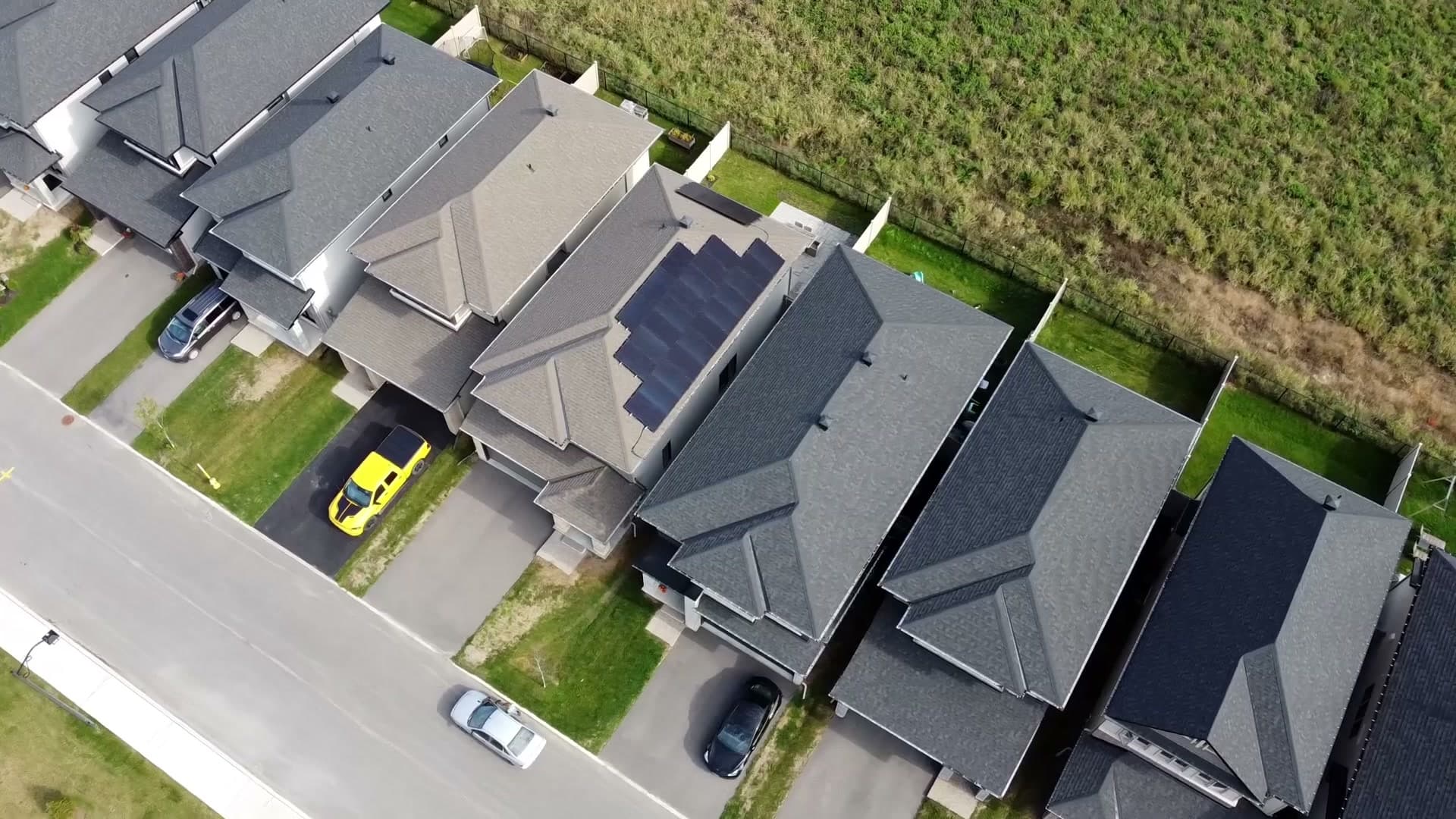
Contact Ottawa's solar energy experts
Ready to get started? Give us a call or send us a quick message for all your solar and green energy needs. The free assessment looks at your roof or site, your last year of electricity use and what you want the system to do, then comes back with a concept design, costs and the equipment we would use.
Monday to Friday, 9 a.m. to 5 p.m.
Saturday and Sunday: closed, visits by appointment