

We design, build & install solar energy solutions
Rooftop, ground-mount and carport solar, battery backup and EV charging for Ottawa homes and businesses, since 2016.
Solar Panel Installation in Ottawa
Ottawa homes get about 1,200 kWh per kW of solar capacity each year (Natural Resources Canada). A typical 7 kW system produces roughly 8,400 kWh, enough to cover the average Ontario household’s annual electricity use. With net metering, any surplus you send to the grid is banked as a credit that carries forward for up to 12 months, after which any remaining credit resets to $0 (O. Reg. 541/05).
We’ve been designing and installing solar systems in Ottawa since 2016. As a CanREA member, we do it all, including system designs to as-built drawings, permits, ESA notification, and the net-metering connection with your local distribution company.
The Home Renovation Savings rebate can put up to $5,000 toward panels and another $5,000 toward a battery.
Key takeaway: A south-facing 7 kW system in Ottawa can produce around 8,400 kWh a year, roughly the typical home’s annual consumption, with net metering credits that carry forward for up to 12 months, then reset to $0.
Complete solar systems for Ottawa homes & businesses
A solar system is more than panels on a roof. Every KAJK Constructors installation includes panels in the 400- to 500-watt range (which most of our installs use), a properly sized inverter (string, microinverter or optimised string – whichever fits your site), and a roof- or ground-mount racking system.
We also handle the electrical panel tie-in, the ESA notification, and the permit process for your net-metering connection to your local distribution company. From the first site visit to the day you start generating your own power, you get one team and one phone number to call – and we stay on for warranty, operation and maintenance.
Key takeaway: When you choose KAJK, you get a turnkey solar system designed, built and commissioned by a licensed installer that files the ESA notification.
Our solar energy solutions and services
If you need any solar energy installation services in Ottawa or surrounding areas, we're the right team for you. Here are some of our services. We also install electric vehicle charging stations for Ottawa homes and businesses — see our EV charger installation service.
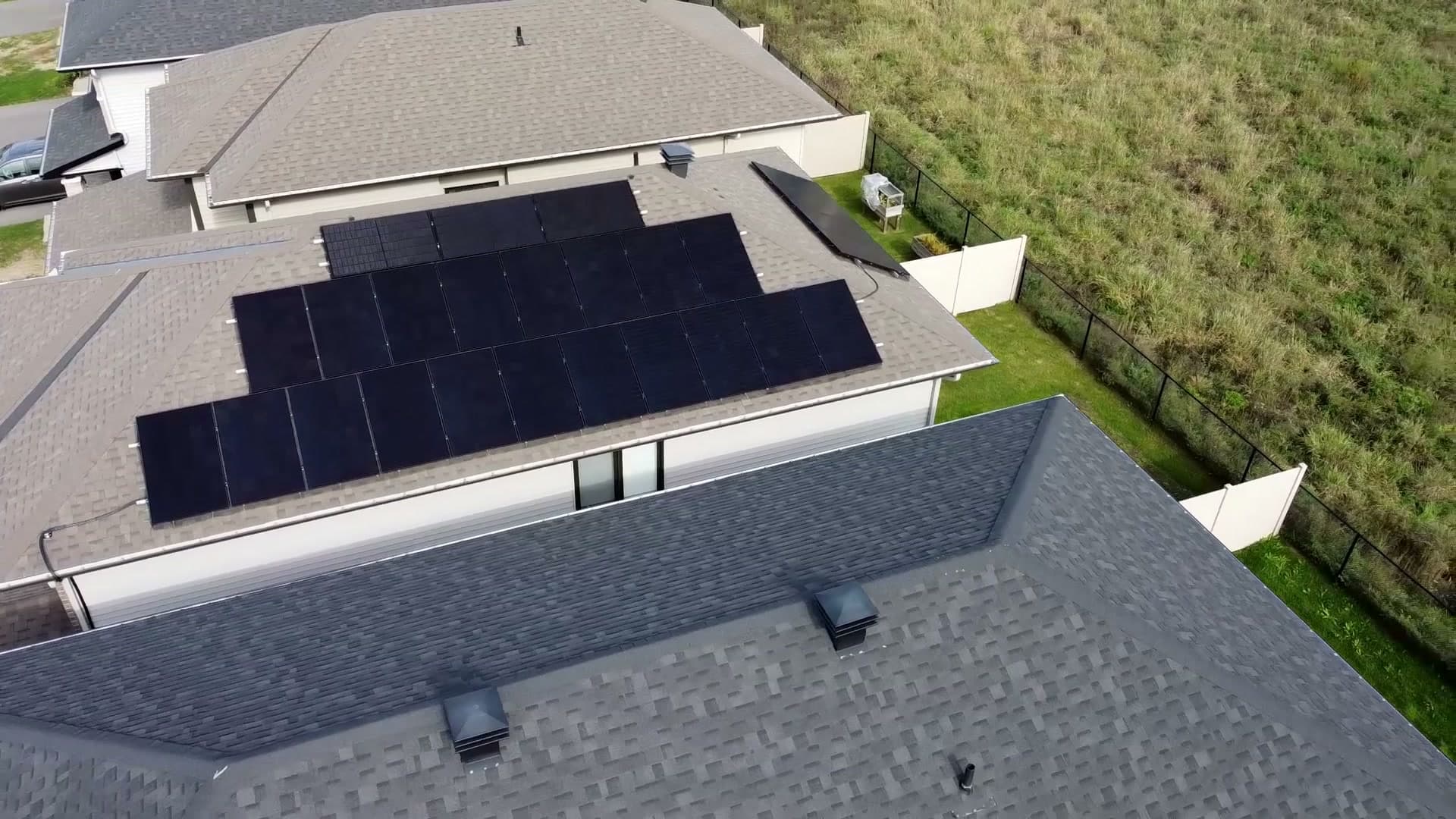 Residential solar We offer solar panel installations for your home, with the option of a solar-only setup or solar backup with energy storage solutions.
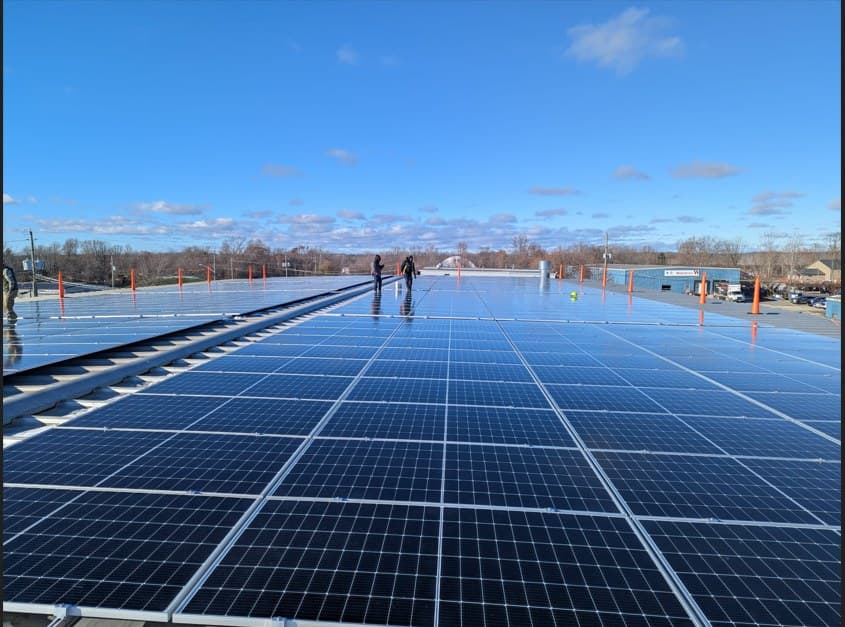 Commercial & industrial From commercial solar panel installation and maintenance to large scale industrial solar solutions, you can count on KAJK Constructors.
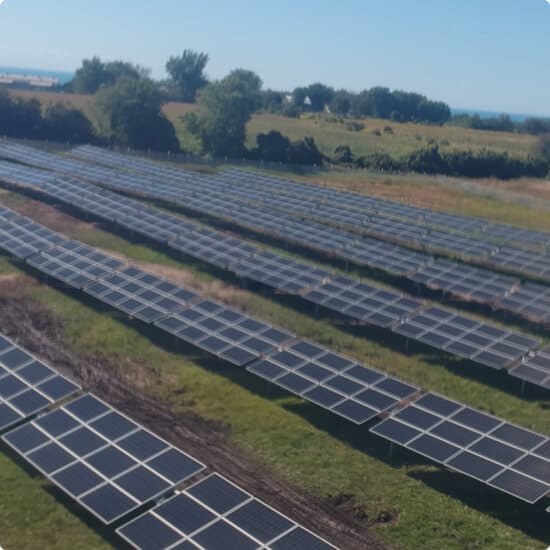 Ground mounts We design, construct, install and repair ground mounted solar panels all across Ontario. Perfect for residential, commercial and industrial locations.
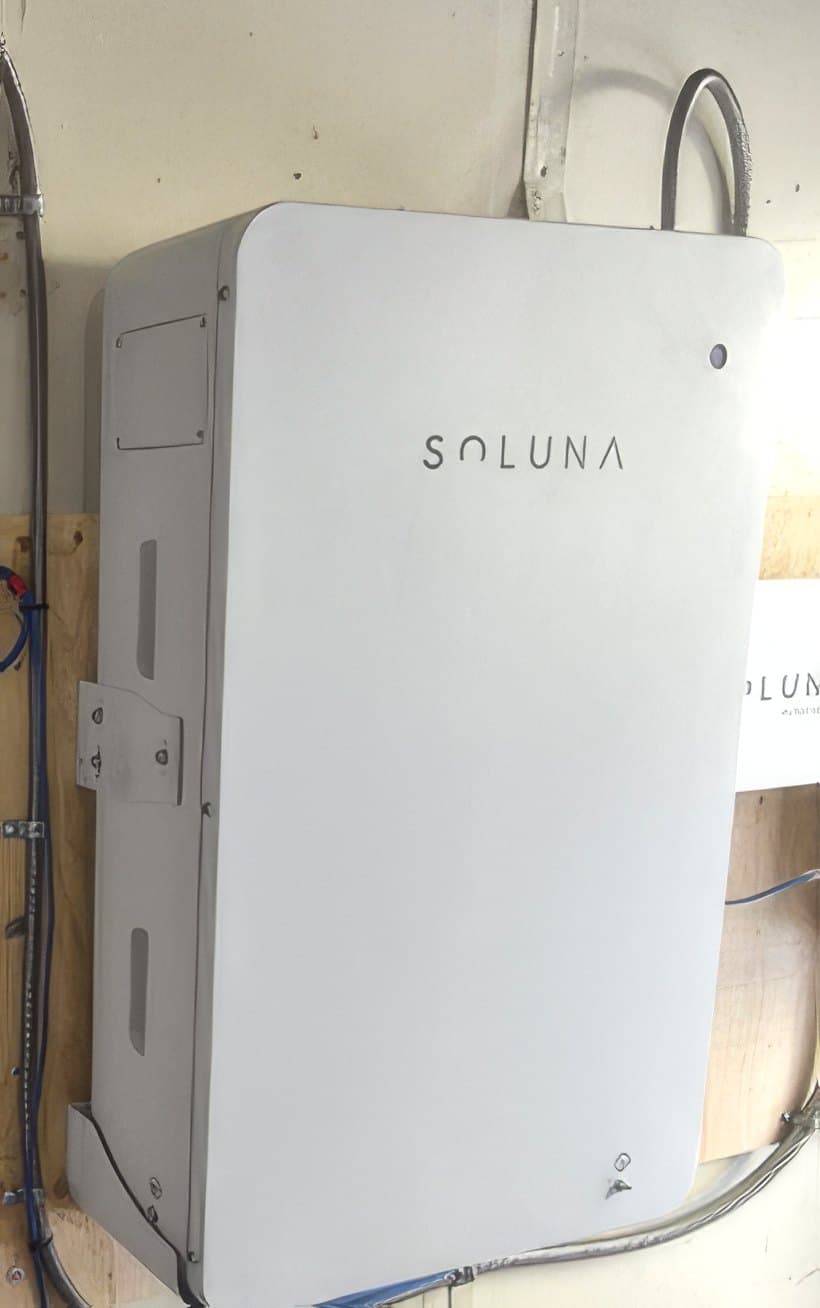 Battery storage Providing lithium battery storage solutions and installations for small scale residential and large scale commercial or industrial locations.
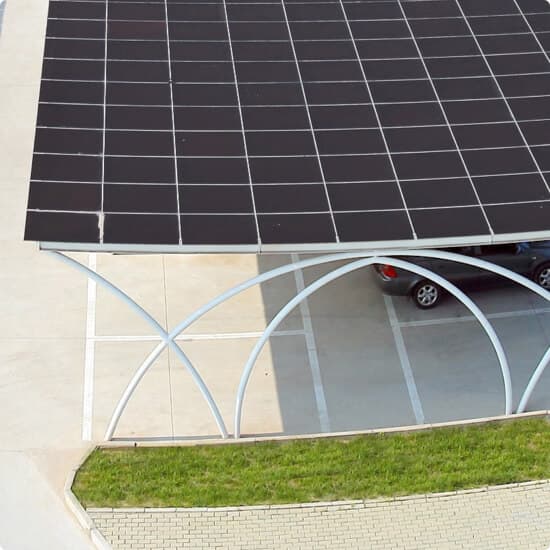 Solar carports System sizing and solar panel installations for residential carports across Ottawa. Perfect for solar backup or solar EV charging.
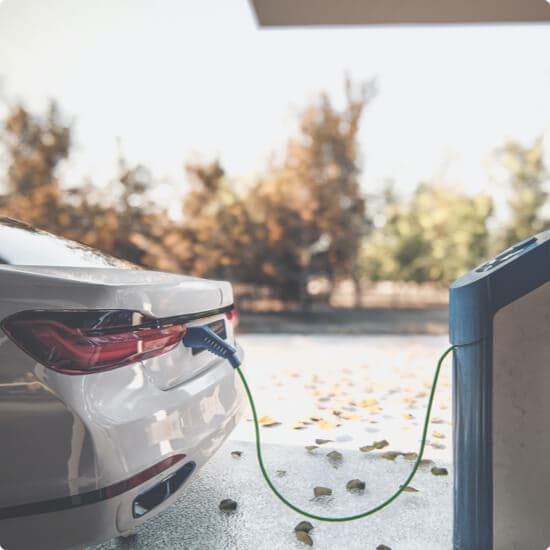 EV charging We provide complete site assessments, design recommendations and installations for electric vehicle charging stations.
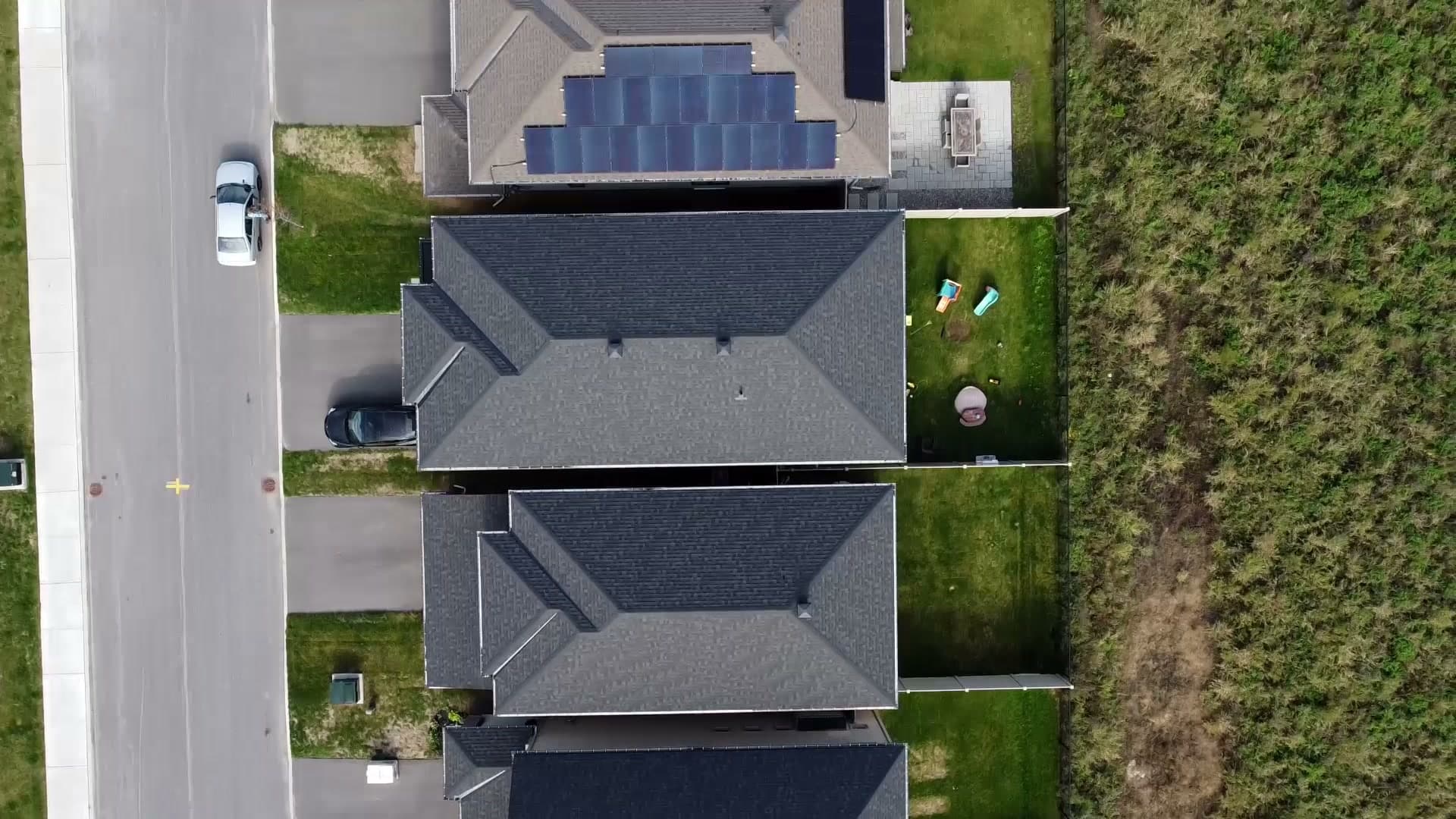 Green retrofits Generation, storage and electrical work toward a net zero home or building.
The steps to solar, the way we build it
Five steps, in our own words, from the first visit to the years after the last panel.
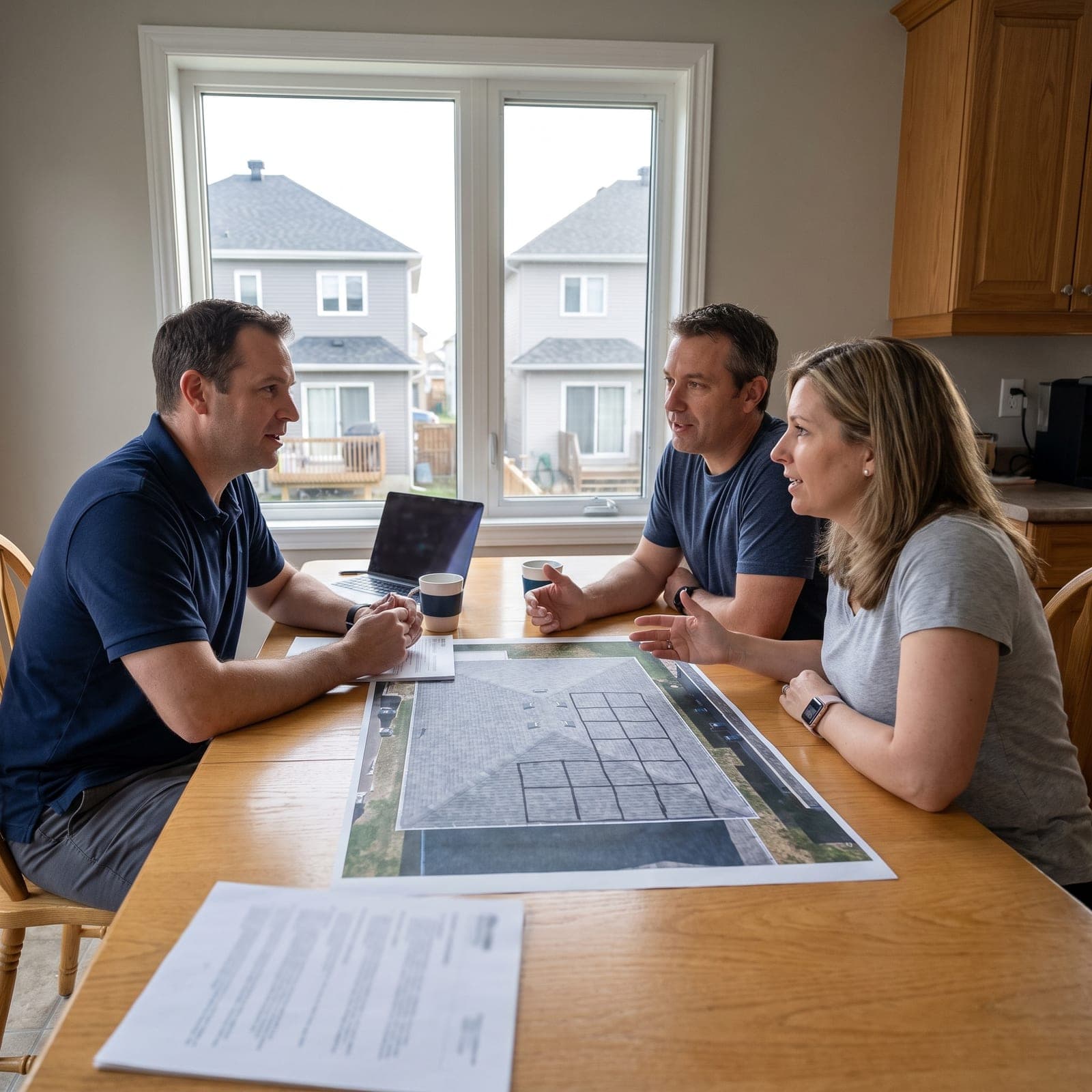
Consultation
From your initial assessment to project management, budgeting, scheduling and acquiring your permits, we handle all major aspects of your project.
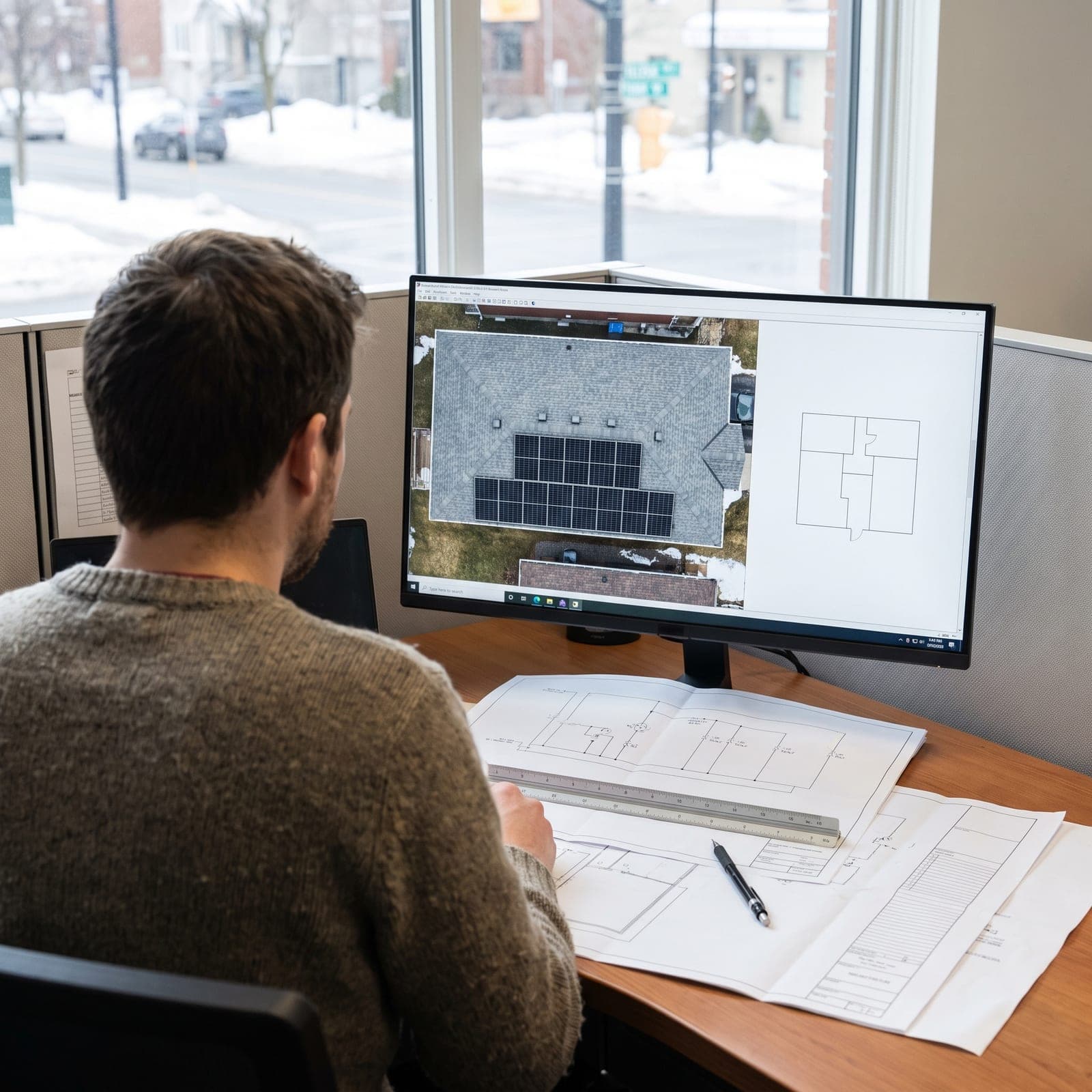
Design
We design your solar project to ensure that it meets your needs in the most affordable way possible. We do it all, including system designs to as-built drawings.
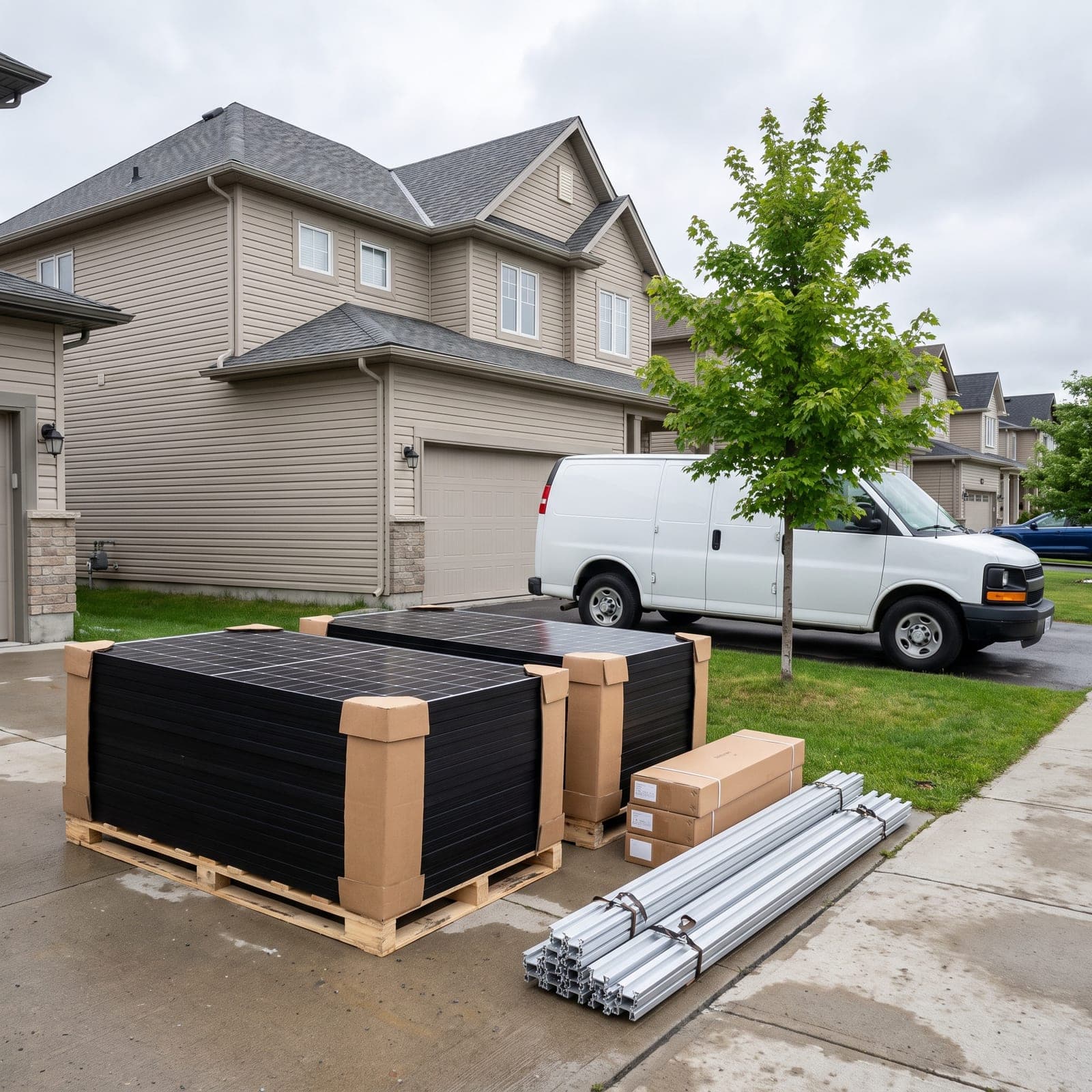
Procurement
We acquire the best quality materials for your project at the lowest cost possible, giving you the best value for your dollar.
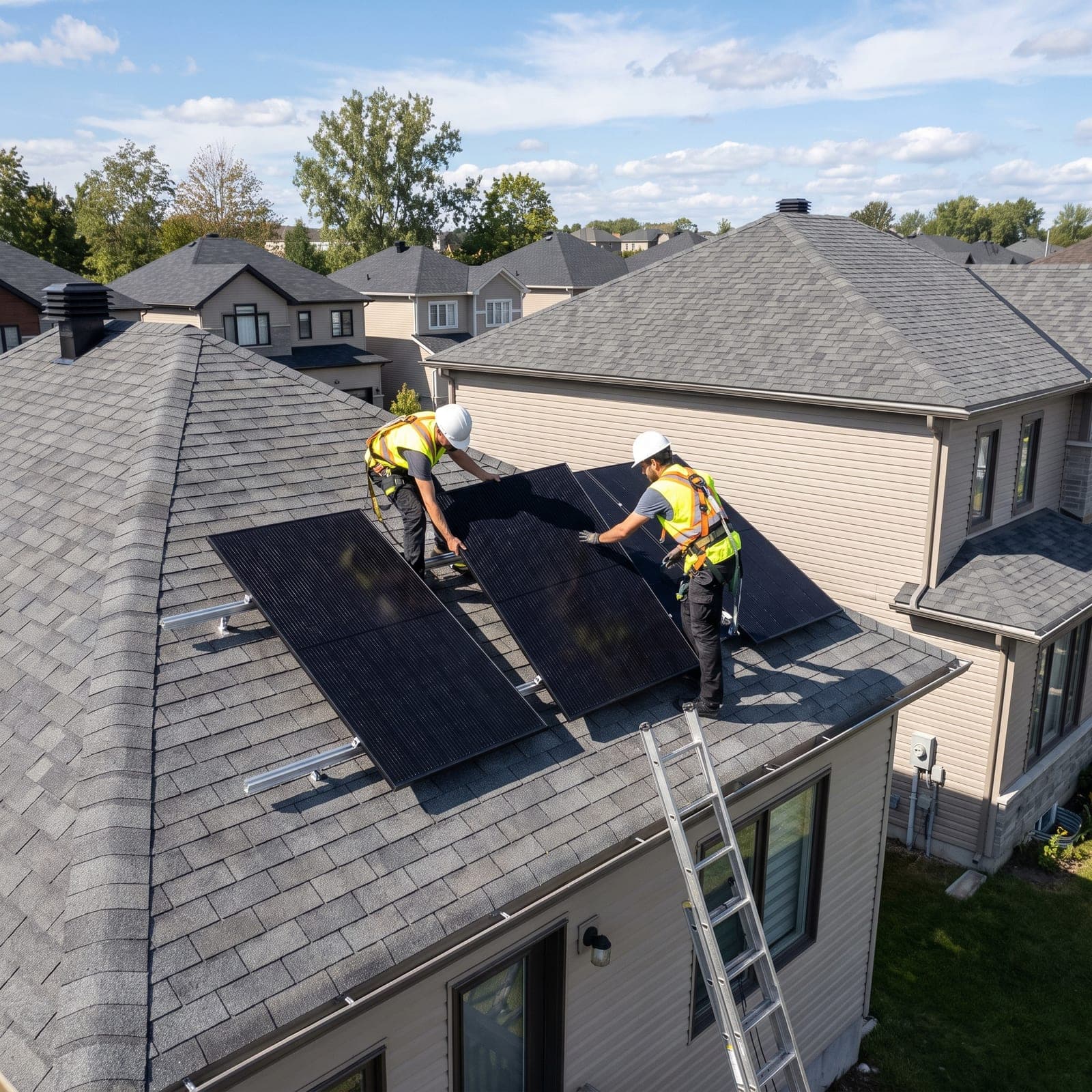
Construction
Our project manager leads all construction projects to ensure that installation, construction and maintenance projects go smoothly and efficiently.
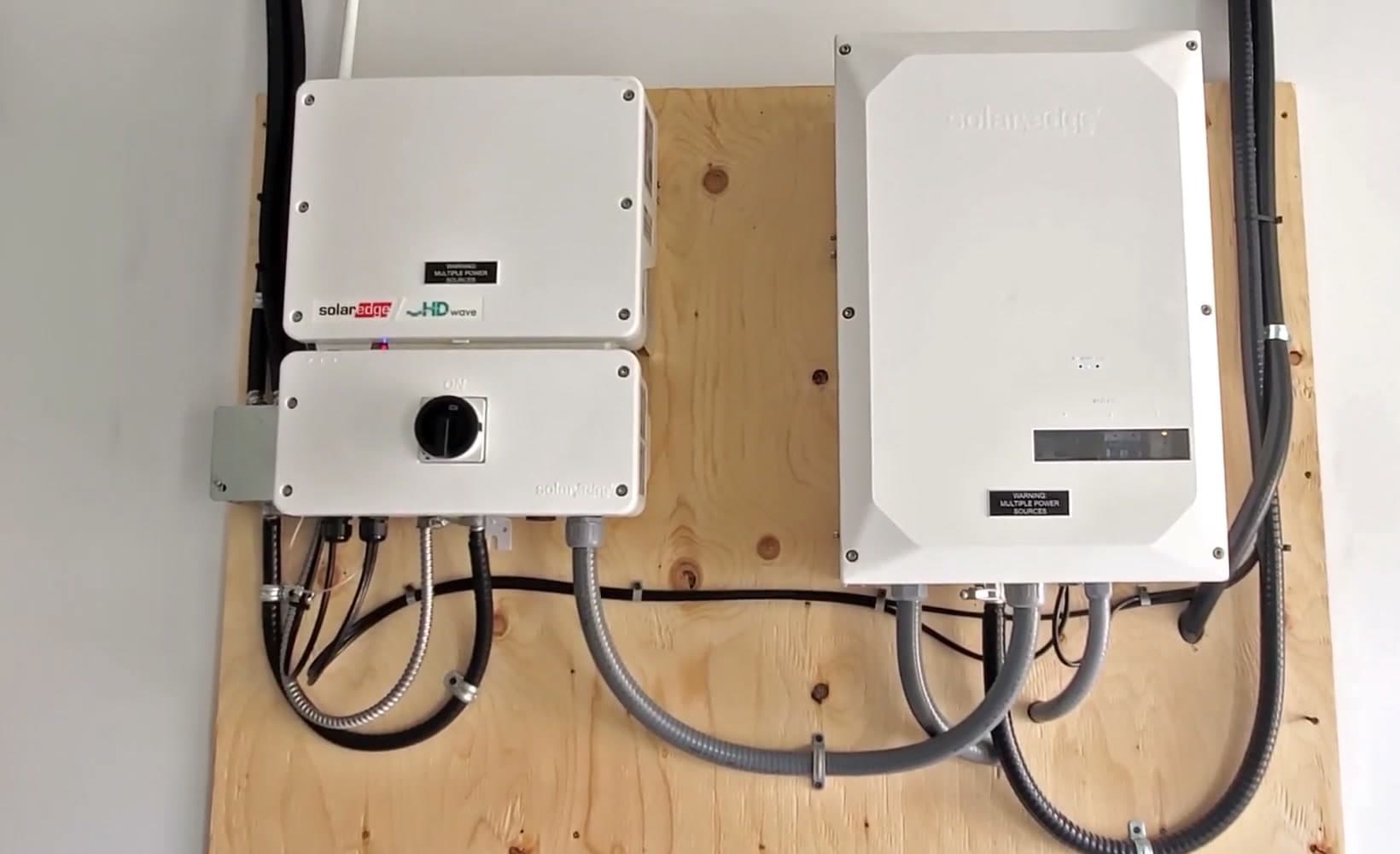
Warranty, operation & maintenance
Once your system is running, we stay with it: warranty support, operation, maintenance and repairs, including on systems other installers put in.
Watch a residential install, step by step
The Steps to Solar: Anchors to Panels
The Steps to Solar: Inverters & Disconnects
Green incentives for your solar project
Take advantage of the various incentives and grants available for your solar energy retrofit project. Interest free loans, federal grants, and much more.
Programs change: the federal Greener Homes grant and interest-free loan closed in 2025. Ontario's rebates and the City of Ottawa loan are open, checked on 2026-10-01.
Ontario solar rebates open now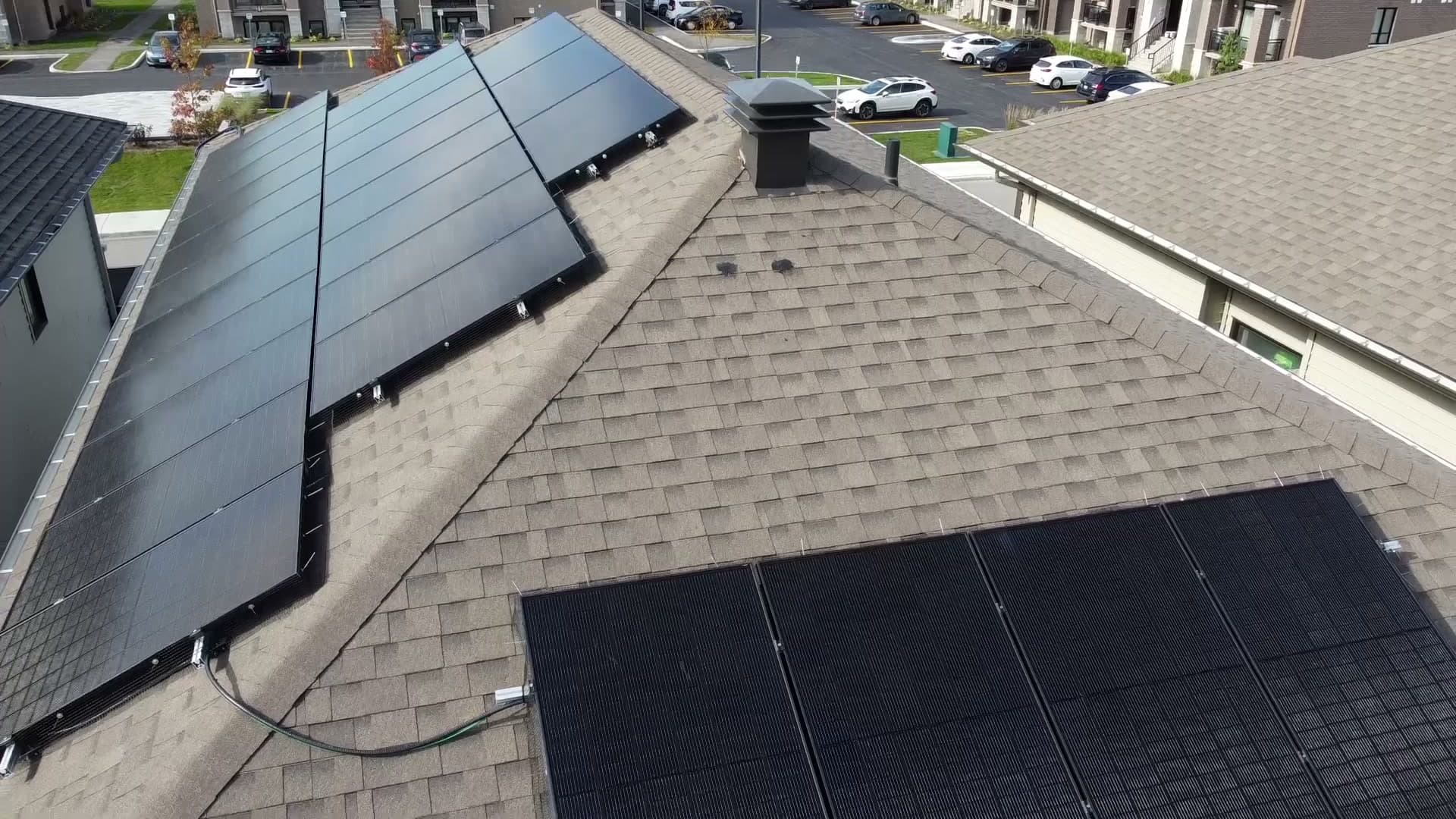
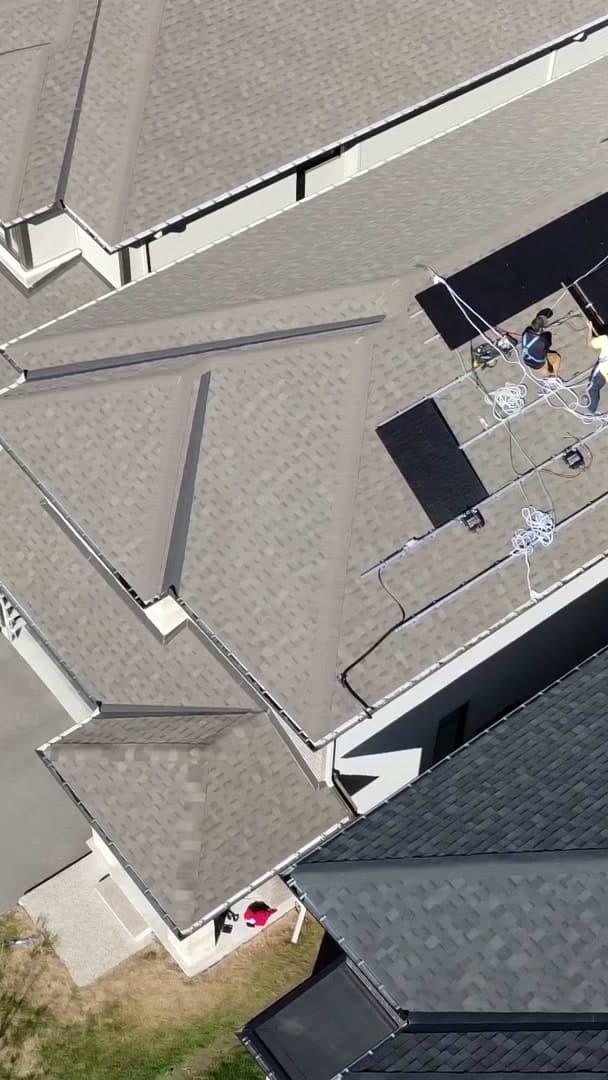
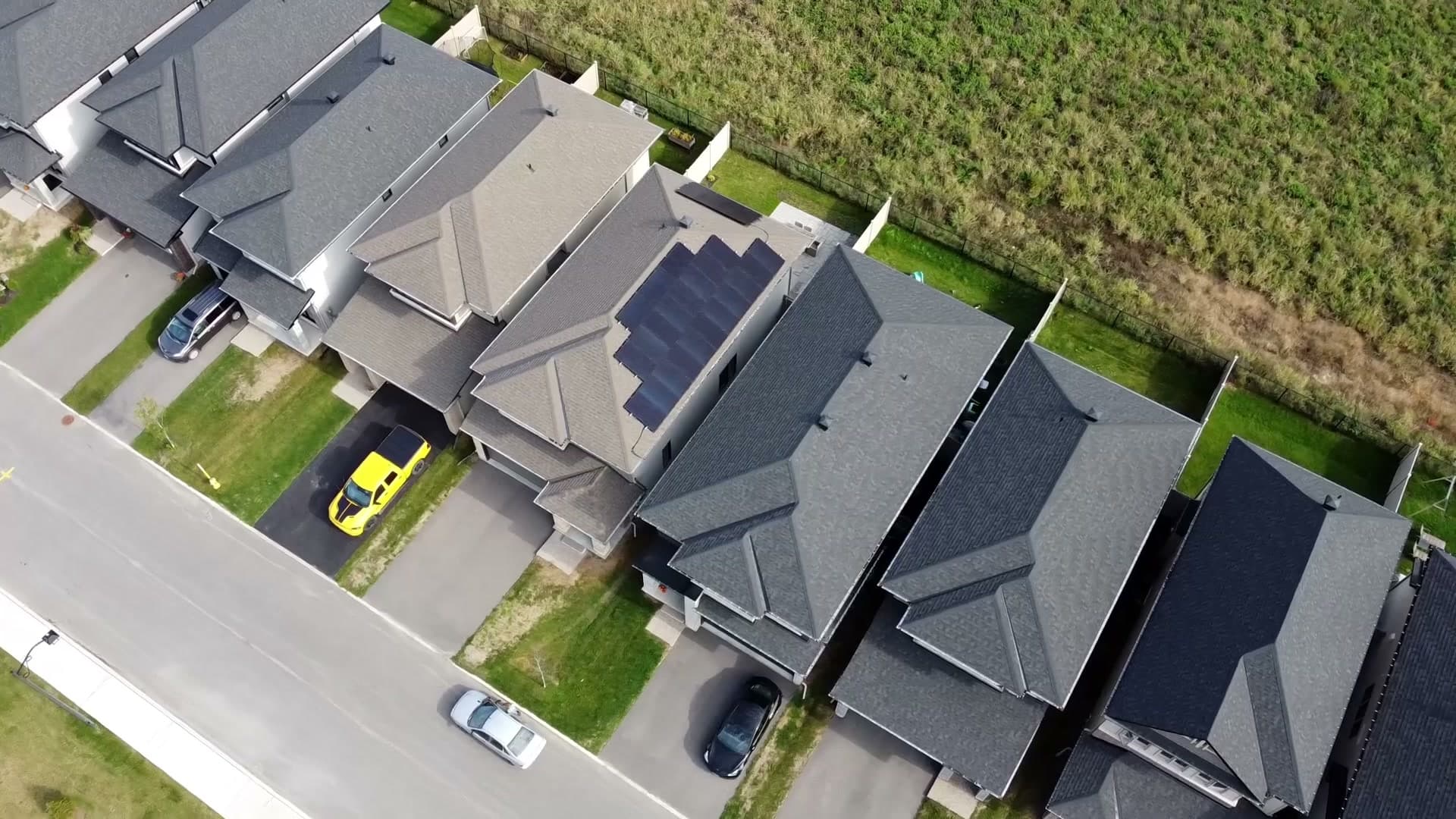
An Orléans net-metering job: 26 panels, 8.8 kW, 10 MWh a year
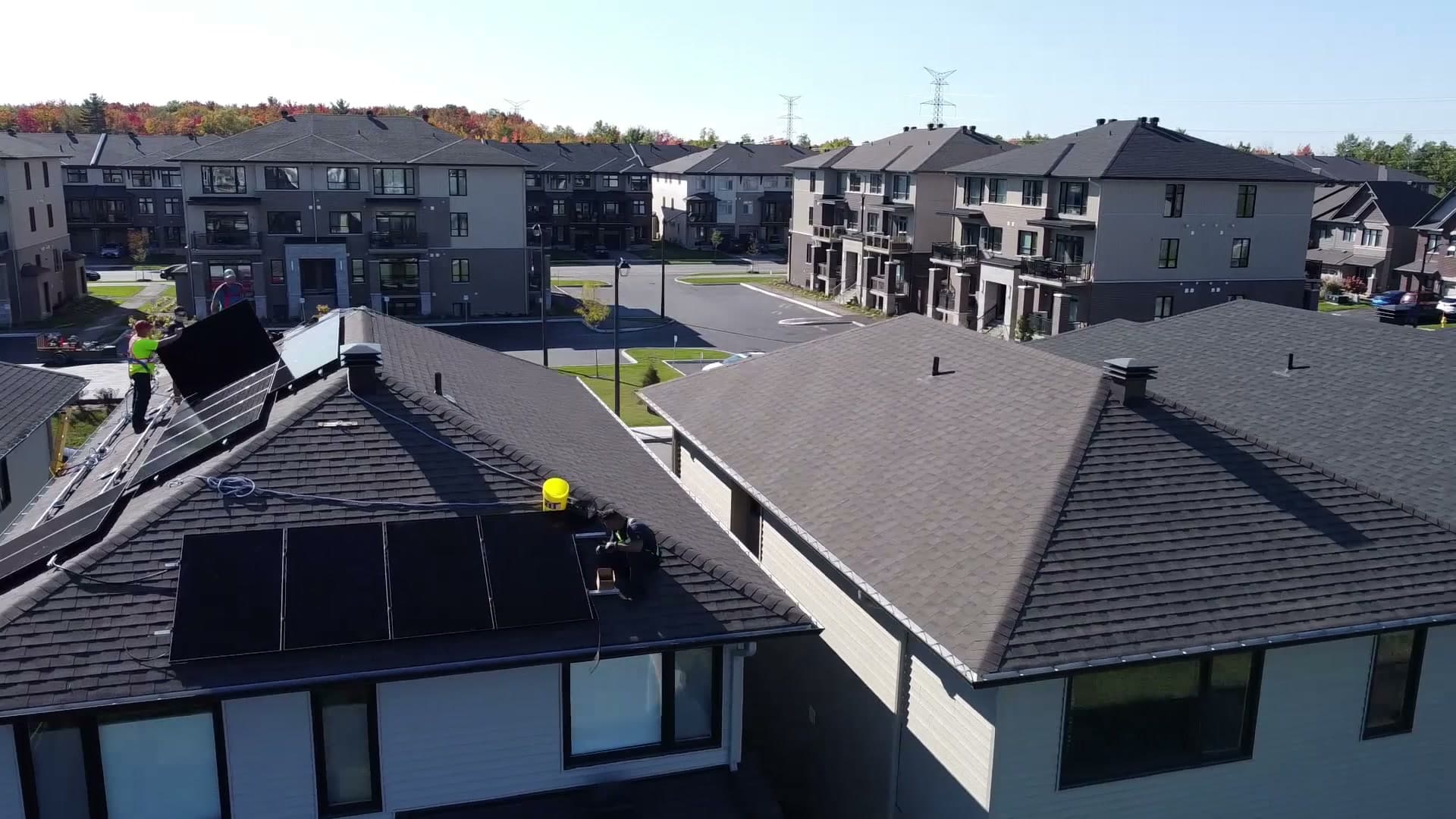
Install day in Orléans 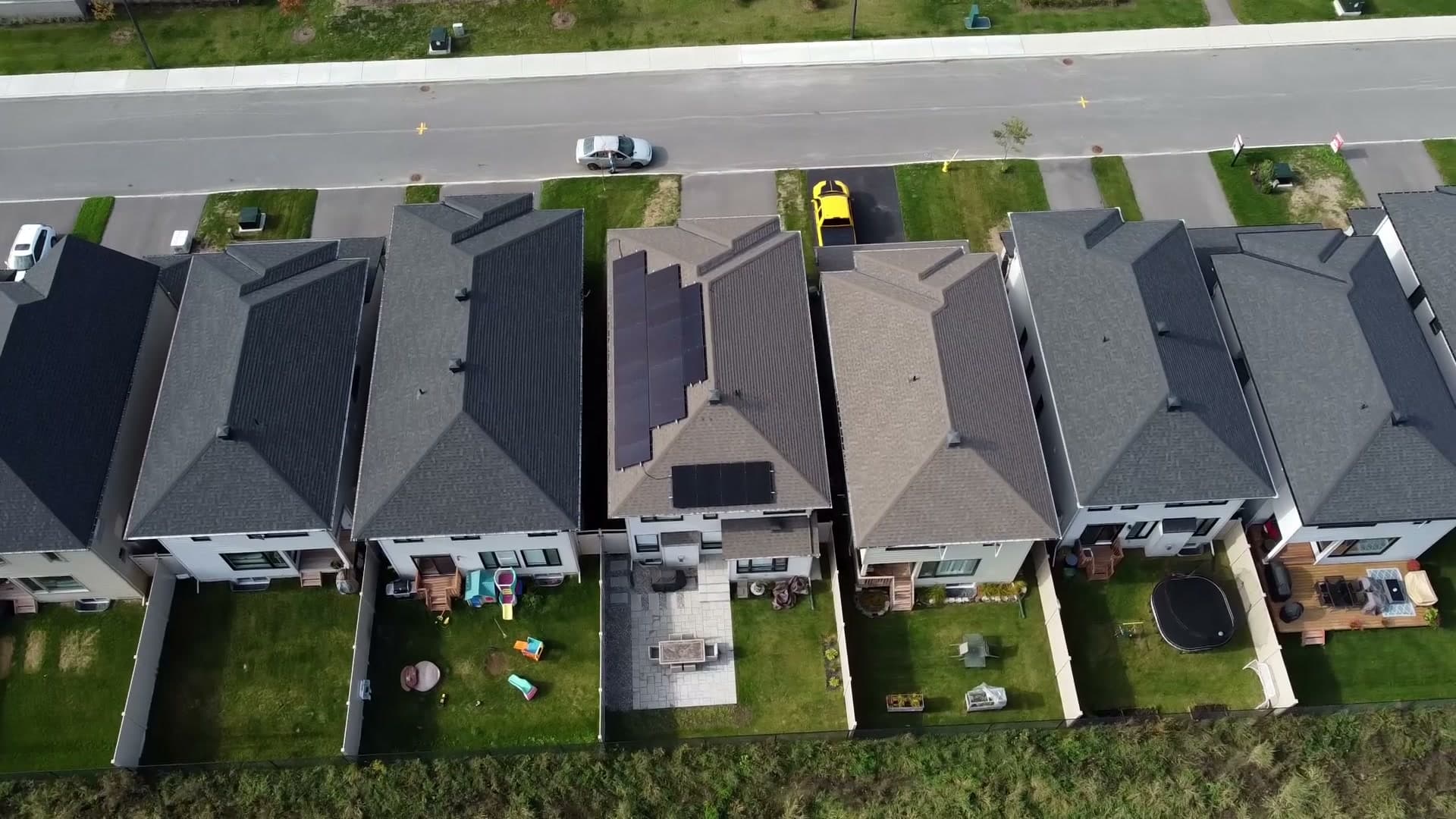
The finished array in its street The same street from straight above
The drone video at the top of this page follows one of KAJK's residential installs in Orléans. Its original overlay reads “NET Metering Solar Installation, 26 Panels, 8.8 kW, 10 MWh/yr.”
Public data backs up the production figure. Natural Resources Canada gives Ottawa 1,200 kWh a year for every kilowatt of south-facing panels at latitude tilt, which would put an 8.8 kW array near 10,560 kWh, and the video's 10 MWh a year sits just under that.
Net metering lets the summer surplus pay down winter bills. Under Ontario's net metering regulation (O. Reg. 541/05), power the house doesn't use goes to the grid for a bill credit, and the credit rolls forward from bill to bill. Your utility resets a balance to $0 only after it has been carried forward in every billing period for 12 months, and it never pays credits out.
“Khaled and his crew did an outstanding job with our solar install. Every step of the process was thoroughly explained and the installation was seamless”
Crystal D-S, KAJK customer “I've had an exceptional experience with Khaled and his team at Kajk. The installation went smooth, everything was done on time and with high quality.”
Anthony A, KAJK customer “I cannot recommend Kajk Constructors enough. They were so helpful in our understanding of the solar system.”
Thecla A, KAJK customer
Is solar worth it in Ottawa?
It can be, on a roof or a patch of land that gets sun most of the day. Natural Resources Canada rates a south-facing array in Ottawa at about 1,200 kWh per kilowatt a year, and the rest depends on how much power you use, what the roof or ground allows, and whether you take Ontario's rebate or net metering.
Our guide to whether solar panels are worth it in Ontario puts the yield beside Ontario's rebate, net metering, the City loan and how long panels last.
KAJK Constructors models those numbers for your property on a free assessment, starting from your last 12 months of electricity use. Call (613) 869-8254 or send the form.
Who KAJK builds solar for
- Homeowners
- A rooftop array sized to the household's use, as a solar-only setup or solar backup with battery storage, grid-tied or off-grid. Residential solar covers how the roof layout is designed. Finished homes in Orléans, Greely and Ottawa East, and installs under way in Kanata and Nepean, are on our solar projects page.
- Businesses
- Commercial solar taken from design and permit acquisition through construction, testing and maintenance, as a solar retrofit or a backup system. A carport over the parking lot can run EV chargers as well. KAJK also handles EV charger installation in Ottawa, from a Level 2 charger in a home garage to stations for a parking lot.
- Farms, rural land and industrial sites
- Open land suits a ground mount, where the racking sets the angle: fixed, adjusted with the seasons, or on a tracker that follows the sun. KAJK designs, builds, repairs and maintains ground mounts all across Ontario.
When you’re ready for a full residential solar panels Ottawa system, KAJK Constructors can help.
For commercial and industrial projects, explore our commercial solar Ottawa services.
Choosing a solar installer in Ottawa
KAJK Constructors has designed and installed solar in Ottawa since 2016. It is licensed, files the ESA notification for the electrical work on every install, and is a member of the Canadian Renewable Energy Association (CanREA). KAJK received a Consumer Choice Award for Solar Energy Systems in Ottawa, and its Google profile read 5.0 from 46 reviews on 2026-10-20.
KAJK also services and repairs systems that other installers put in, including ones whose installer has gone out of business. Larry Fleece wrote on Google that KAJK “provided superior service to my solar system when other installers had gone out of business.” Whichever installer you choose, ask about three things before you sign:
- The ESA notification
- Electrical work for hire in an Ontario home is done by a Licensed Electrical Contractor, who files a notification of work with the Electrical Safety Authority before it starts. ESA inspects the work, and your local distribution company connects the system only after ESA issues its Connection Authorization. Ask for copies for your records.
- The utility connection request
- For a system of 12 kW AC or less, your local distribution company answers the service request with a Service Layout; Hydro Ottawa's takes up to 15 days. A larger system goes through a Connection Impact Assessment. Your installer should tell you which route your design takes, and file it for you.
- Written rebate pre-approval
- On the Home Renovation Savings path, nothing is bought or installed before written pre-approval, and taking the rebate rules out net metering. The application goes in before any equipment is ordered.
Solar-only or solar with battery backup?
KAJK installs both: a solar-only setup, or solar backup with energy storage. You notice the difference during a power cut and in the evening, when the panels stop producing solar power. Battery sizing and backup circuits are on the solar battery storage and home battery backup page.
Need battery storage? Get a free home battery backup assessment in Ottawa.
Solar-only (grid-tied)
- The house uses solar first; surplus earns net-metering credits
- Stops in a power outage: CanREA notes panels “will not power the building during a power outage unless there is energy storage attached”
- No battery to buy or find room for
- Can take Ontario's solar rebate only by giving up net metering
Solar + battery (solar backup)
- Stores daytime output for the evening or a grid outage
- Backs up the circuits it is wired for; Hydro Ottawa advises asking what a system supports and for how long
- Moves use away from expensive hours: on the Ultra-Low Overnight plan priced from 2025-11-01, on-peak power was 39.1¢/kWh and overnight 3.9¢
- Battery rebate of $300 per kWh, up to $5,000, only with new solar and only without net metering
What the free assessment covers
It starts from two things you already have: the property's address and a year of electricity use. Book it with the form or at (613) 869-8254.
- A year of electricity use
- Annual kWh sets the system size. Hydro Ottawa customers can download up to 24 months of hourly use from MyAccount; Hydro One customers find it under My Energy Usage.
- The roof or the ground
- Direction, pitch, shading and space, plus how long the roof has left. CanREA's buyer checklist asks whether a roof will hold up for the next 20 years before panels go on it.
- Production modelling
- KAJK's residential process includes a full cable and equipment power-loss calculation, with site modelling and simulations to get the most production out of the site over the years.
- A proposal in writing
- A concept design with costs, equipment selection and plans, which KAJK walks through with you so you can weigh the options before you commit.
- The connection route
- Whether the design stays at 12 kW AC or less, the utility's micro-generation process, or goes above it and needs a Connection Impact Assessment, and whether you want net metering or the provincial rebate. KAJK's process includes acquiring the permits.
Your Ottawa Solar Installation: Permits, Structural Review & Grid Connection
A building permit is required when the total panel face area on a building reaches 5 m² (about 54 square feet). The exception is a flush-mounted system on a low-rise home where a professional engineer licensed in Ontario has already assessed the roof and confirmed it can handle the added load. The City of Ottawa targets a first permit review within five business days.
KAJK Constructors determines whether your project qualifies for the exemption and manages the full process. We coordinate the structural review through a licensed Ontario engineer, file the permit application, and handle the City’s review and inspection.
After the permit is secured, the sequence for connecting to the grid is: (1) we submit a service request to your local distribution company, (2) we file the ESA notification and the system is inspected, and (3) once the Electrical Safety Authority issues its Connection Authorization, your utility completes the connection. For a step-by-step overview, see our permits and connection guide.
KAJK Constructors has been a dedicated Ottawa solar installer since 2016, holds the Consumer Choice Award for Solar Energy Systems in Ottawa, is a CanREA member, and carries a 5.0 rating from 46 Google reviews.
Key takeaway: When you go solar with KAJK, you get a local, award-winning team that secures your permits, passes structural review, and connects you to the grid, so your Ottawa system is built to perform without the headache.
How Ottawa's climate affects solar output
Natural Resources Canada's photovoltaic potential database rates a south-facing array at latitude tilt (about 45° here) at 1,200 kWh per kilowatt a year in Ottawa, a little ahead of Toronto's 1,163. That figure already allows for system losses, through a performance ratio of 0.75.
Output follows the seasons. The same array makes about 125 kWh per kW in July, 62 in December and 57 in November, the weakest month, so with net metering the credit built up in summer is drawn down through the darker months.
Ottawa airport averages 231.9 cm of snowfall a year (Environment and Climate Change Canada, 1991 to 2020 normals), yet snow on the panels costs less output than you might think. On a rooftop array at its research centre in Varennes, Quebec, NRCan's CanmetENERGY measured snow losses of 1.64% of the year's output in 2020 (Baldus-Jeursen et al., IEEE Journal of Photovoltaics, July 2023).
The authors caution that it is one site, and that arrays whose snow can't slide off can lose double digits a year. In some winter months of that study, cold days with clear panels lost less than summer days did, because panels run at a higher voltage in the cold.
Tilt is where design helps. NRCan's figures for panels set 15° steeper than latitude give 67 kWh per kW in December against 62, for a lower annual total of 1,140. On a roof the pitch mostly decides the angle; on a ground mount, KAJK can set it.
How much does it cost to install solar panels in Ottawa?
The cost depends on the system's size, what it is mounted on and how it connects, so KAJK's proposal prices your system once the assessment is done.
Size moves the price most, and size comes from your use. The Ontario Energy Board sets electricity prices around a typical household using 700 kWh a month, or 8,400 kWh a year. At NRCan's 1,200 kWh per kW, covering that would take about 7 kW of panels, and your own bills will give a better figure than the provincial average.
Your local utility adds its own costs. For systems of 12 kW AC or less, it quotes its share of the work in a Service Layout and takes payment before starting. Above 12 kW AC you need a Connection Impact Assessment, with fees that vary by system size.
How a quote is priced, and the rebate and loan that change what you pay, are in our guide to solar panel cost in Ottawa.
Is Ontario giving rebates for solar panels?
Yes. The Home Renovation Savings Program, run by Enbridge Gas and Save on Energy, offers $1,000 per kW for home solar, up to 50% of costs and $5,000, plus $300 per kWh for a battery paired with new solar, also up to $5,000 (program page read 2026-10-01).
The program attaches a condition that shapes the design: its incentives are for load displacement only, and participants “are not eligible to participate in a net-metering agreement with their LDC”. You can't buy or install anything before written pre-approval, so you choose between the rebate and net metering before the system is designed. A net-metered system like the Orléans job and a rebate-funded one are different projects.
Businesses have a separate route through Save on Energy's Retrofit Program. Program terms change, so the incentives page tracks what is open now, and the assessment confirms what applies to you.
Ottawa homeowners can now claim the Ontario solar rebate: up to $5,000 for panels and $5,000 for batteries. Start with a free assessment.
Do solar panels protect your roof?
Yes. The panels cover the roof membrane under them and help prolong its life. KAJK installs on new roofs and on roofs 10 years old or newer, and if a roof needs replacing later, a one-time removal and reinstall can be included in the quote.
Older systems are looked after too. KAJK services and repairs systems that other contractors installed, and when a 20-year microFIT contract ends (the first run out no earlier than late 2029), the IESO points owners to net metering with their local distribution company, which keeps the same panels working.
What is the 20% rule for solar panels?
The 20% rule is a rule of thumb from equipment sellers' guides; Ontario's net metering regulation and utility connection rules don't contain it. BLUETTI's guide, for example, defines it as “designing a solar system to generate about 20% more energy than the average monthly consumption”, to cover losses and cloudy days.
In Ottawa that shortcut double-counts. NRCan's 1,200 kWh per kW figure already includes system losses, and net metering limits what oversizing earns: O. Reg. 541/05 requires the system to generate “primarily for the generator's own use”, and credit carried through 12 straight months of bills is reset to $0.
Size from your last 12 months of use, plus any load you know is coming, such as an electric car or a heat pump.
More questions
What does a solar system include?
A complete solar system from KAJK Constructors includes solar panels, an inverter, a mounting system (rooftop or ground-mount), electrical wiring and protection, and a bi-directional utility meter (installed by your local utility after our work is done). We size every component to your annual electricity usage and roof or property layout, and we file the required ESA notification so your system is safe and code-compliant.
Optional add-ons include battery backup and EV charging – both of which we can integrate into the same system.
Will solar panels keep my power on during an outage?
Not on their own. A grid-tied, solar-only system shuts off when the grid goes down, and CanREA notes that panels will not power a building in an outage unless storage is attached. With a lithium battery, the circuits the system backs up stay on until the stored energy runs out.
Hydro Ottawa suggests asking an installer what a system supports and for how long, and the assessment answers that for your house.
How long does a solar connection to the grid take?
For systems of 12 kW AC or less, your local utility sends a Service Layout after the Service Request: Hydro Ottawa's takes up to 15 days, or 60 for complex projects, and stays valid for 90 days. The utility does its part of the work after payment, once the Electrical Safety Authority's Connection Authorization is in. Some feeders have no capacity left for new systems, which the utility confirms first.
Do you need a building permit for solar panels in Ottawa?
Yes, once the panels on a building add up to a face area of 5 m² or more, unless the system qualifies for the City of Ottawa's low-rise exemption. That exemption covers a flush-mounted system on a low-rise home whose roof a professional engineer licensed in Ontario has assessed as sound for the panels, wind and snow (City of Ottawa, read 2026-10-10).
The permits and connection steps for an Ottawa home show where the City permit fits beside ESA and the utility.
How long do solar panels last?
The U.S. Department of Energy puts the average working life of a solar panel at 25 to 35 years as of 2025, up from around 20 years in 2007. So the roof under an array needs to last as long as the panels, which is why CanREA's checklist asks buyers whether the roof will hold up for the next 20 years before anything goes on it.
Output falls slowly over that life: a U.S. National Renewable Energy Laboratory review of nearly 2,000 measured rates found a median loss of 0.5% a year (Jordan and Kurtz, 2013), so a panel still makes about 88% of its first-year output at 25 years (our arithmetic).
Is it better to have solar panels flat or angled?
Angled. Natural Resources Canada rates panels facing south at latitude tilt, about 45° in Ottawa, at 1,200 kWh per kW a year, against 977 lying flat, and in December at 62 kWh per kW against 27. NRCan's PV Ready Guidelines add that arrays at 15° or less shed snow poorly. On a pitched roof the pitch sets most of the angle; on a ground mount, KAJK sets it.
Does KAJK install solar outside Ottawa?
Yes. KAJK serves Ottawa and Ontario, mainly from Alfred in the east to Pickering in the west, and builds ground-mounted arrays all across the province. The free assessment works from your address, so the first step is the same wherever the property is: send the form or call (613) 869-8254, Monday to Friday, 9 a.m. to 5 p.m.
What happens after 25 years of solar panels?
They keep working. The U.S. Department of Energy puts the average working life of a solar panel at 25 to 35 years as of 2025, so 25 years is a milestone rather than an end date. KAJK also services and repairs systems that other contractors installed, and when a 20-year microFIT contract ends, the IESO points owners to net metering, which keeps the same panels in use.
Is it better to have more solar panels or more batteries?
They do different jobs, so the answer starts with what you want from the system. Panels make the energy; size them from your last 12 months of electricity use. A lithium battery stores some of it for the evening and keeps selected circuits on during an outage, which panels alone will not do.
KAJK installs solar-only and solar with battery backup, and the free assessment compares the two for your house.
How many solar panels does an Ottawa home need?
For the Ontario Energy Board's typical household, using 700 kWh a month, about 7 kW of panels: 14 to 18 panels at the 400 to 500 watts most of KAJK's installs use. The worked sizes for 6, 10 and 20 kW homes, from KAJK's own installs, are on our residential solar page.
What do KAJK customers say about their solar installations?
Our Google reviews tell the story. Carlo R. said, “After interviewing four different solar installation companies, it was clear that Kajk Constructors stood out as the best choice.” Chris G. added, “The owner, Khaled, walked us through the entire process and ensured everything ran smoothly.” We maintain a 5.0 rating from 46 Google reviews.
Is KAJK a licensed electrical contractor?
Yes. KAJK Constructors is a licensed electrical contractor, and we file the ESA notification for every solar installation. We’re also a CanREA member and recipient of the Consumer Choice Award for Solar Energy Systems in Ottawa.
Sources for this page (24), last read 2026-10-24
- Photovoltaic potential and solar resource maps of CanadaNatural Resources Canada, read 2026-10-01
- Municipality database: photovoltaic potential (kWh/kWp), CSVNatural Resources Canada, read 2026-10-01
- Canadian Climate Normals 1991 to 2020, Ottawa Macdonald-Cartier Int'l A (6106000)Environment and Climate Change Canada, read 2026-10-01
- Snow Losses for Photovoltaic Systems: Validating the Marion and Townsend Models, vol. 13 no. 4, July 2023IEEE Journal of Photovoltaics (Baldus-Jeursen et al., CanmetENERGY, Natural Resources Canada), read 2026-10-01
- O. Reg. 541/05, Net MeteringGovernment of Ontario (e-Laws), read 2026-10-01
- DER connection processHydro Ottawa, read 2026-10-01
- The rise of home energy: Solar + battery storage explained (blog, 2026-09-23)Hydro Ottawa, read 2026-10-01
- Track your usageHydro Ottawa, read 2026-10-01
- Understand my bill: Time-of-UseHydro One, read 2026-10-01
- Backgrounder: Regulated Price Plan, 2025-10-17Ontario Energy Board, read 2026-10-01
- Go solar and save up to $5000 backHome Renovation Savings Program (Enbridge Gas and Save on Energy), read 2026-10-01
- Solar Photovoltaic incentives with the Retrofit programSave on Energy (IESO), read 2026-10-01
- How Solar WorksCanadian Renewable Energy Association, read 2026-10-01
- Choosing Your InstallerCanadian Renewable Energy Association, read 2026-10-01
- End-of-Life Management for Solar PhotovoltaicsU.S. Department of Energy, read 2026-10-01
- microFIT OverviewIESO, read 2026-10-01
- What Is the 20% Rule for Solar Panels? (2026-08-11)BLUETTI, read 2026-10-01
- KAJK's Business Profile: 5.0 from 46 reviewsGoogle, read 2026-10-20
- Active member directoryCanadian Renewable Energy Association, read 2026-10-01
- Best Solar Energy Systems, OttawaConsumer Choice Award, read 2026-10-01
- Kajk Constructors Inc reviewsBirdeye (mirror of Google reviews), read 2026-10-01
- Electric Vehicles & Charging SystemsElectrical Safety Authority (ESA), read 2026-10-01
- Photovoltaic Degradation Rates: An Analytical Review (2013)National Renewable Energy Laboratory (Jordan and Kurtz), read 2026-10-24
- Photovoltaic Ready Guidelines, Version 1.0 (2018)Natural Resources Canada, CanmetENERGY, read 2026-10-10
Contact Ottawa's solar energy experts
Ready to get started? Give us a call or send us a quick message for all your solar and green energy needs. The free assessment looks at your roof or site, your last year of electricity use and what you want the system to do, then comes back with a concept design, costs and the equipment we would use.
Monday to Friday, 9 a.m. to 5 p.m.
Saturday and Sunday: closed, visits by appointment