

EV charger installation in Ottawa
KAJK Constructors installs EV charging stations at Ottawa homes and businesses, from a Level 2 charger in a garage to stations in parking garages and lots. We assess the site, recommend the design and install it, and we can tie the charger to solar so your car runs on power from your own panels. In Ontario, the wiring needs an ESA notification before work starts.
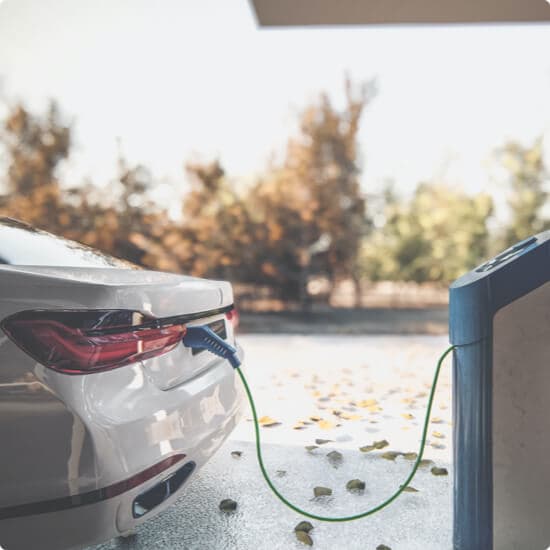
Electric vehicle charging station installations
As drivers switch to plug-in hybrid and electric vehicles, charging stations are becoming more and more of a necessity in parking garages and parking lots. Whether you need one installed at home for your convenience, or at your business for your employees, get it installed by KAJK Constructors. We have years of experience in providing installations for EV charging stations and can easily guide you through the EV incentives to get you the best deal on your charging station.
Power your daily commutes with solar energy
Driving an electric vehicle is plenty of fun, but it's much better knowing where your energy is coming from, and knowing that your vehicle is fueled by the sun. Here's why people choose solar EV charging stations:
- Greatly reduces EV charging costs by using solar-generated power.
- Allows you to drive your vehicle exclusively on solar energy.
Level 1, Level 2 or DC fast: which charger you need
ESA sorts EV charging into three levels. Two of them belong at home.
- Level 1 (120 V)
- A standard household outlet, so there may be nothing to install. Hydro Ottawa says it can take up to 50 hours to bring a battery-electric car from empty to 80 per cent.
- Level 2 (240 V)
- About the supply a stove or dryer uses: 240 volts and 30 amps in ESA's example. Hydro Ottawa puts a full charge at four to 10 hours, and NRCan says Level 2 adds 15 to 40 km of range per hour of charging.
- DC fast (Level 3)
- Direct current straight to the battery. NRCan says drivers can typically charge 80% of the battery in 30 minutes. ESA describes these as commercial equipment, not suitable for a home.
Can a normal electrician install an EV charger?
Yes, if that electrician is licensed. ESA's rule for EV chargers is the rule for all electrical work for hire in an Ontario home: it must be done by a Licensed Electrical Contractor with an ECRA/ESA licence. That contractor files a notification of work, which is ESA's name for the electrical permit, before the work starts. It is separate from any City of Ottawa building permit.
When the work passes, ESA issues a Certificate of Acceptance. ESA's guide for multi-residential buildings says a contractor's licence number should appear on its vehicles, business cards and estimates. Ask for the number, and keep copies of the permit and the certificate: ESA notes both matter for home insurance and resale.
The charger needs a recognized certification mark too, such as CSA, cUL or cETL (Hydro Ottawa's examples). ESA warns that uncertified chargers from online marketplaces can damage the building's wiring and the car.
Will your electrical panel handle a Level 2 charger?
Often it will, and a load calculation settles it: can your service carry a charger beside the furnace, dryer, stove and air conditioning? If not, Hydro Ottawa's EV page says to check with them, since any change to the service runs through the utility.
There can be a cheaper route than a bigger service. Rule 8-500 of the Ontario Electrical Safety Code permits an energy management system: a monitor and controller that slows or pauses the charger when the rest of the house is drawing hard. ESA Bulletin 86-1-7 (May 2025) confirms that when such a system monitors the service and controls the charger, the charger's load does not have to be counted in the service calculation at all.
Many chargers can also be turned down. The same bulletin lets the installer set a charger below its nameplate rating, lock the setting and label it. Its own example pairs a 40 A setting with a 50 A breaker and a 48 A setting with a 60 A breaker.
How much should it cost to get an EV charger installed in Ottawa?
We do not publish a standard price, because the panel, the wire run and the charger change every job. Two Ottawa electricians do publish Level 2 home ranges:
Those are each firm's own figures, read on 2026-10-01, not KAJK prices, and the rebates such pages mention age quickly (current status below). Your assessment prices your own job.
LB Electric (published 2025-01-25)
- Level 2, complete: $800 to $2,500, covering the charger, electrical upgrades, licensed labour and the permit
- About $1,500 is what it says many homeowners can expect
- Level 1 on an existing outlet: $200 to $500
Ottawa Electric Service (published 2026-02-24)
- Standard Level 2: $1,500 to $3,500 for the charger, labour and permit
- A 100 A to 200 A panel upgrade adds $1,800 to $4,000
- Trenching to a detached garage adds $500 to $1,500
EV chargers for condos, parking garages and lots
In a condominium, Ontario gives the owner a defined route. O. Reg. 48/01 under the Condominium Act sets it out:
Apply in writing
Under section 24.5, the owner delivers a signed, written application to the corporation, with drawings and specifications showing the installation and its location.
The board answers within 60 days
It may reject the application only on a qualified professional's report that the installation would break a law, the Electrical Safety Code included, harm the building's structure, or pose a serious risk. A board that does not answer in time is deemed not to have rejected it.
Sign the installation agreement
Section 24.6 then gives the owner and the corporation 90 days to agree in writing on how the system is installed and how the cost is split.
Plan the building's capacity
ESA's multi-residential guide says to get the building's historic load, a year of peak use, from the utility before sizing, and to plan for more chargers than you need today.
What a business parking lot or garage needs
Employee parking, customer spots and fleet bays add requirements a garage at home does not have. ESA Bulletin 86-1-7 sets out how chargers are protected from vehicles: at least 1 m away from vehicles, set 1 m back on a raised curb, mounted 1 m above grade, or behind bollards sunk at least 1.5 m below grade and spaced no more than 1.5 m apart. A charger rated over 60 A, or over 150 V to ground, needs its own disconnecting means under Rule 86-304.
An energy management system lets several stations share one feeder by staggering their load, and ESA's multi-residential guide recommends evaluating one when you plan.
Charge your car from your own solar
Pair the charger with solar and the kilowatt-hours going into the car can come from your roof or carport instead of the grid, which cuts what each charge costs you. ESA Bulletin 86-1-7 notes that app-controlled chargers can set the charging time, the maximum current and the source: grid, solar or battery storage.
When the grid does the charging, timing matters. On Ontario's Ultra-Low Overnight plan, power costs 3.9 cents per kWh from 11 p.m. to 7 a.m. every day, against 39.1 cents on weekdays from 4 p.m. to 9 p.m. (Ontario Energy Board prices set for November 1, 2025).
A solar carport puts the panels over the parking spot, and a home battery stores daytime solar for an evening plug-in. A bi-directional charger, which lets the car power the house, counts as a grid-connected power source under ESA's rules, and its plans go to ESA for review first.
EV incentives in Ottawa as of October 2026
We guide clients through EV incentives, and in 2026 the list is short. The federal iZEV rebate closed on March 31, 2025. Its replacement, Transport Canada's Electric Vehicle Affordability Program, covers new vehicles bought or leased from February 16, 2026: up to $5,000 for a battery-electric car in 2026 and up to $2,500 for a plug-in hybrid, falling each year to 2031, with a $50,000 price cap unless the car is made in Canada. It is paid at the dealer, toward the car, not the charger.
For chargers, NRCan's Zero Emission Vehicle Infrastructure Program funded public, workplace, fleet and multi-unit residential stations. Every stream showed “Closed for applications” when we read it on 2026-10-01. Programs change, so the assessment confirms what is open for your site; our incentives page tracks the rest.
Our process is simple
If you need solar energy solutions, we'll be there from conception to completion. We have the experience and accreditation to lead the way in all phases of your solar project. Here's what you can expect.
Consultation
From your initial assessment to project management, budgeting, scheduling and acquiring your permits, we handle all major aspects of your project.
Procurement
We acquire the best quality materials for your project at the lowest cost possible, giving you the best value for your dollar.
Design
We design your solar project to ensure that it meets your needs in the most affordable way possible. We do it all, including system designs to as-built drawings.
Construction
Our project manager leads all construction projects to ensure that installation, construction and maintenance projects go smoothly and efficiently.
Green incentives for your solar project
Take advantage of the various incentives and grants available for your solar energy retrofit project. Interest free loans, federal grants, and much more.
Programs change: the federal Greener Homes grant and interest-free loan closed in 2025. Ontario's rebates and the City of Ottawa loan are open, checked on 2026-10-01.
Ontario solar rebates open now“I cannot recommend Kajk Constructors enough. They were so helpful in our understanding of the solar system.”
Questions we get asked
What's the average cost to install an EV charger?
In Ottawa, two electricians publish ranges for a Level 2 home installation: $800 to $2,500, with about $1,500 typical (LB Electric, 2025-01-25), and $1,500 to $3,500 (Ottawa Electric Service, 2026-02-24). The second adds $1,800 to $4,000 when a 100 A panel must go to 200 A. Those are their figures, not ours; the assessment prices your panel and wire run.
What is the 80% rule for EV?
It means two different things. For the battery: many cars charge quickly to about 80% and then slow down, which is why Electrify Canada recommends unplugging once that bulk charge is done, and why NRCan quotes fast-charging times to 80%. For the wiring: a charger draws no more than about 80% of its circuit's rating. ESA Bulletin 86-1-7 pairs a 40 A charger setting with a 50 A breaker.
Do I need a permit to install an EV charger in Ottawa?
Yes: an ESA notification of work, which is the electrical permit. ESA says every EV charger installation needs one filed before work starts, and a Licensed Electrical Contractor files it for you. It is separate from a City building permit. When the work passes, ESA issues a Certificate of Acceptance; keep it for your insurer and for resale.
Can my condo board refuse an EV charger?
Only on narrow grounds. Under O. Reg. 48/01, s. 24.5, the board can reject an owner's application only with a qualified professional's report that the installation would break a law, harm the structure or pose a serious risk. It must answer within 60 days, or it is deemed not to have rejected it. It can ask for a different location if that adds no unreasonable cost.
Sources for this page (14), last read 2026-10-01
- Electric Vehicles & Charging SystemsElectrical Safety Authority (ESA), read 2026-10-01
- Guide to EV Charger Installation for Multi-Residential Buildings (2023)Electrical Safety Authority (ESA), read 2026-10-01
- Bulletin 86-1-7: Electric vehicle charging systems (issued May 2025)Electrical Safety Authority (ESA), read 2026-10-01
- Electric vehicles (EVs)Hydro Ottawa, read 2026-10-01
- Electric Vehicle Charging Infrastructure for Canada (modified February 2024)Natural Resources Canada, read 2026-10-01
- Getting startedElectrify Canada, read 2026-10-01
- Cost of Installing EV Charger in Ottawa (published 2025-01-25)LB Electric, read 2026-10-01
- EV Charger Installation Cost Ottawa: Full Breakdown [2026] (published 2026-02-24)Ottawa Electric Service, read 2026-10-01
- O. Reg. 48/01 (Condominium Act, 1998), sections 24.2 to 24.7Government of Ontario (e-Laws), read 2026-10-01
- Electricity rates (current prices set for November 1, 2025)Ontario Energy Board, read 2026-10-01
- Closed: Incentives for Zero-Emission Vehicles (iZEV) (modified 2026-01-21)Transport Canada, read 2026-10-01
- Electric Vehicle Affordability Program: Overview (modified 2026-09-10)Transport Canada, read 2026-10-01
- Zero Emission Vehicle Infrastructure Program (modified 2026-03-20)Natural Resources Canada, read 2026-10-01
- Contractor Locator Tool (public licensing data)Electrical Safety Authority (ESA), read 2026-10-01
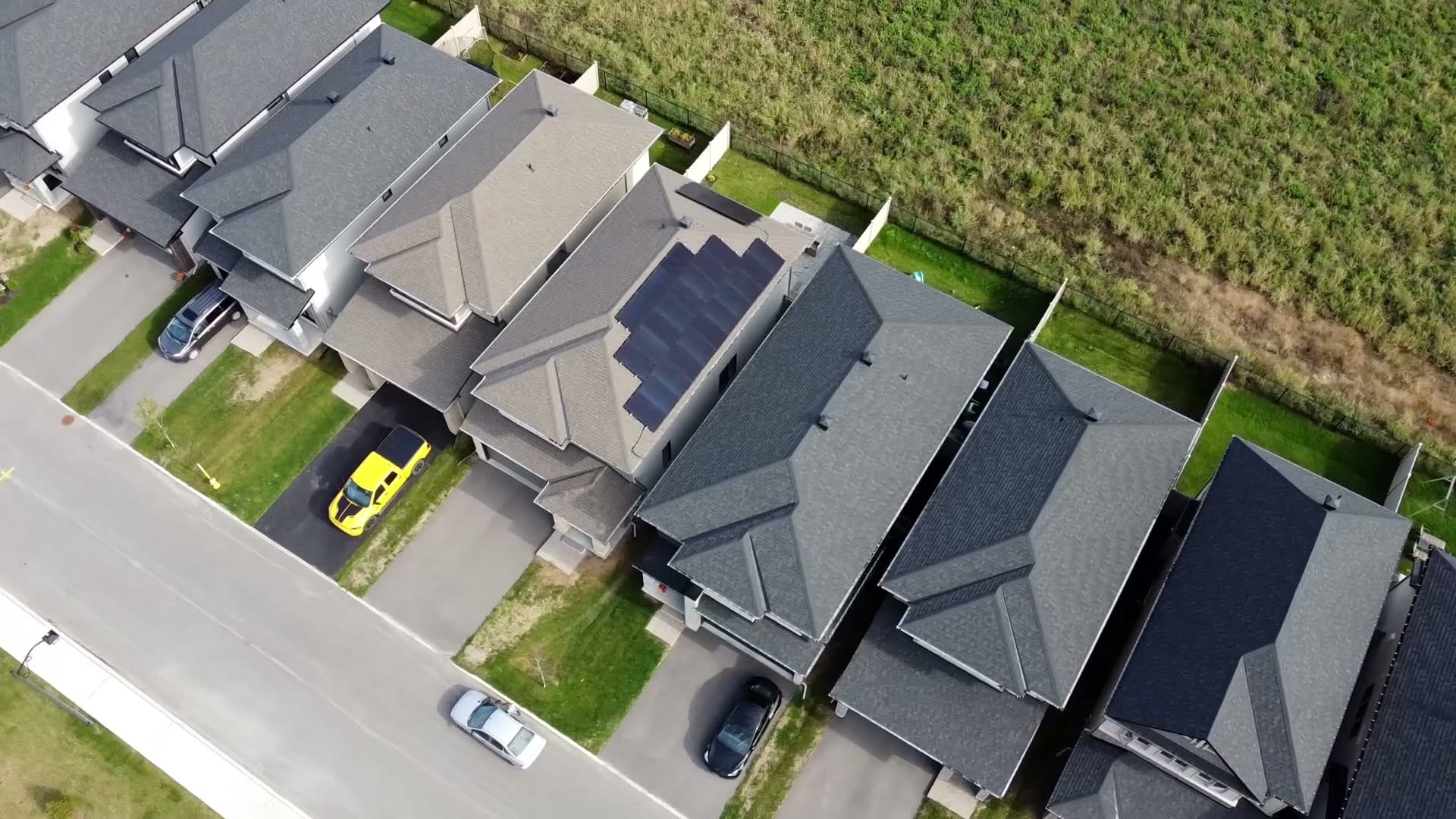
Contact Ottawa's solar energy experts
Ready to get started? Give us a call or send us a quick message for all your solar and green energy needs. The free assessment looks at your roof or site, your last year of electricity use and what you want the system to do, then comes back with a concept design, costs and the equipment we would use.
Monday to Friday, 9 a.m. to 5 p.m.
Saturday and Sunday: by appointment